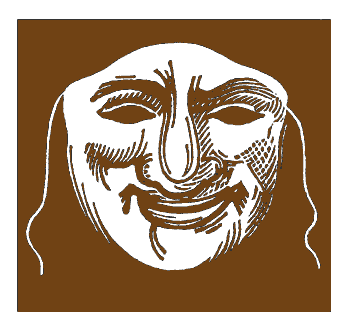
Persona: The Mask You Think You Are
In classical Latin, the word *persona* referred to the mask worn by actors in a play. For Carl Gustav Jung, the term took on deeper psychological meaning: the mask we wear every day in society — our roles, our labels, our curated presentation to others.
The Persona is not a lie, but it is not the whole truth. It is a functional facade: teacher, parent, artist, colleague. Through it, we engage with the external world. But behind it lies the Self — far more complex and mysterious.
The Function of the Persona
We need the Persona to survive socially. It allows us to adapt to our surroundings, to communicate, to be accepted. But over-identification with the Persona can lead to spiritual hollowness — the feeling that we are merely performing life, not living it.
Peeling Back the Mask
Jung warned that clinging too tightly to one's Persona may leave the unconscious undeveloped — our Shadow, our Anima/Animus, our true individuality. True growth begins when we realize: *I am not only this mask.*
“The persona is that which in reality one is not, but which oneself as well as others think one is.”
— Carl Jung